Live
Form
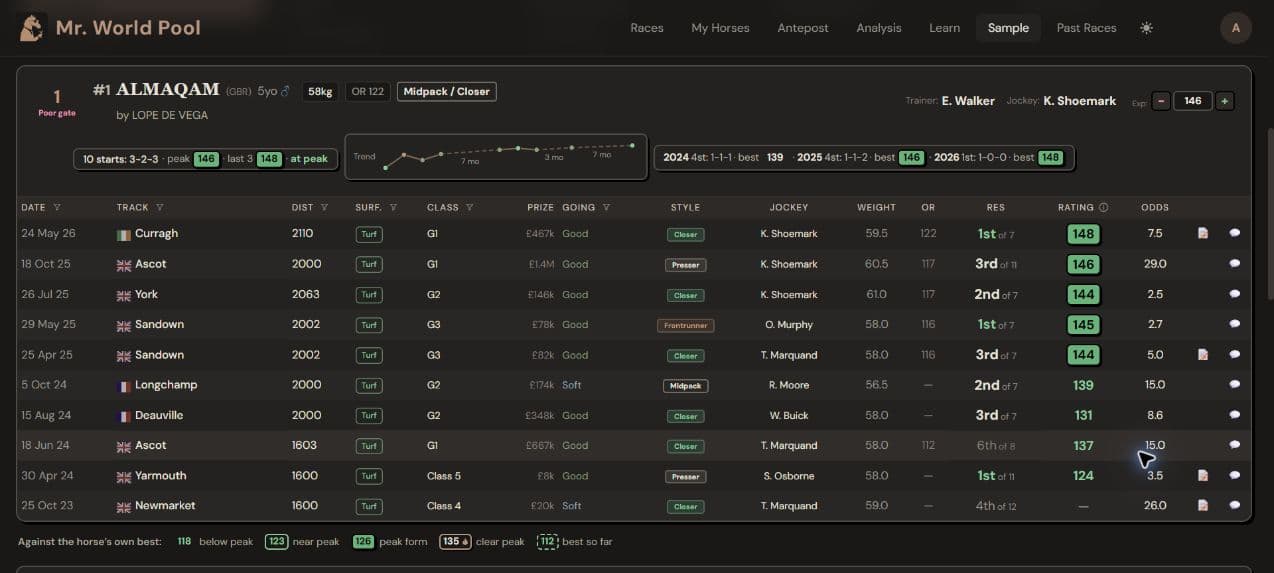
The ratings product, and the heart of everything else. Every racecard brings ratings, full form and machine-learning predictions together on one page, all built from scratch with AI as my development partner.
Aksel N. Edvardsen — 2026
For over a year I've been building with AI ten to fifteen hours a day. This is what came out of it.
The year has been fantastic, but I never meant to stay alone in my building bubble forever. Along the way I found a role that suits me almost too well: Forward Deployed AI Engineer, or my own version of it.
In short, you work closely with people, whether they're clients or colleagues. You find out what they need, build the solution together with them and teach them to use it. Some things I can build all the way myself, and others become good groundwork for the specialists. The version I like best leaves room to play a little and change how people work, not just ship code.
Whatever I learn, I'm happy to share.
2026 is my year with AI. I promised myself a whole year of just building, to see how far it can go. I don't think one person will be able to get this much out of the models for very long, so I've grabbed it with both hands and then some. I've learned an enormous amount, and a couple of old dreams have come true along the way.
At least 80 per cent of the time has gone into Mr. World Pool, an analytics platform for international horse racing, and into the model behind it, which sets its own odds on the races. The rest went into side projects, some in the same universe and some just small experiments to see what is actually possible.
2019
Started an AI group at Ikomm. Educated in organisational psychology, with creativity and innovation as my field, and always into technology.
2019–2025
Led Ikomm Academy and the apprentices, and became product lead for a development team. All 13 apprentices got the top grade, and around 20 people from the Norwegian welfare system got permanent IT jobs.
2025
Took the leap to build full time with AI. I started out in chat windows with five-hour limits.
2026
Mr. World Pool soft-launched at Royal Ascot in June. It now has paying customers and data from 17 countries, and it's growing fastest in Australia.
From GitHub and Claude Code, taken in early October 2026.
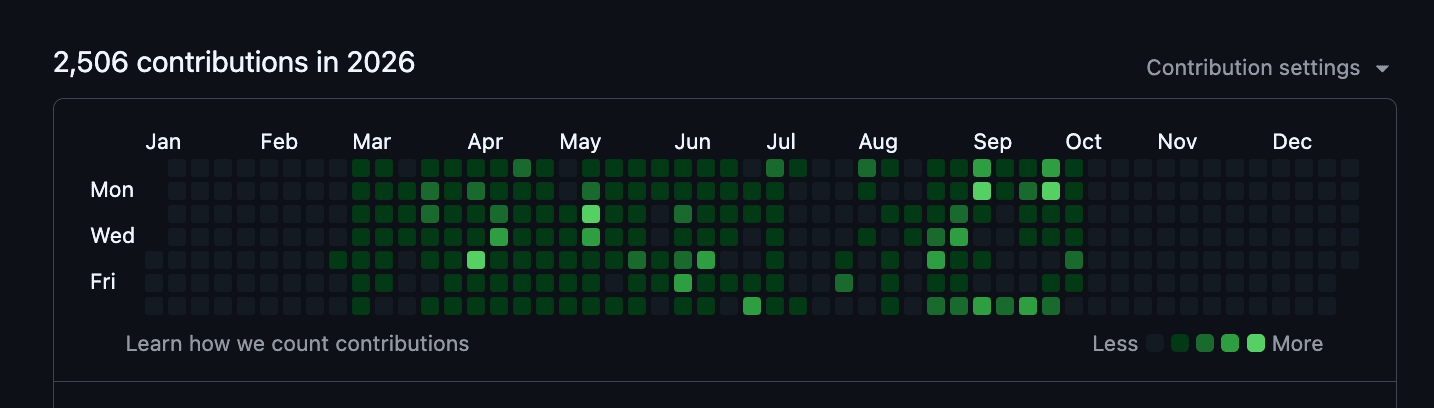
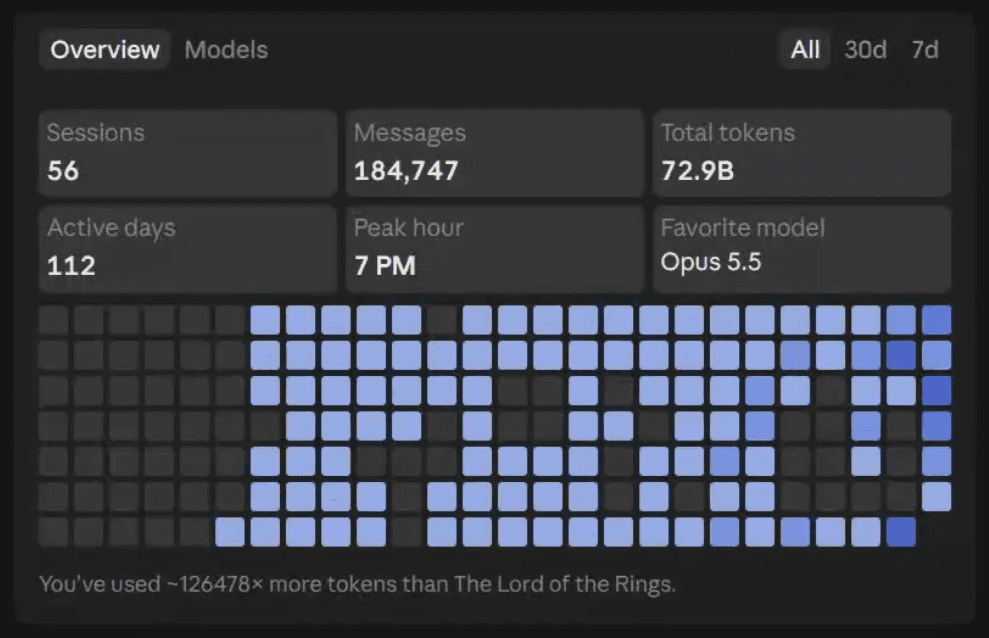
The Claude Code usage overview gives a fair picture from March on. I was just as active for six months before that.
A modern form guide for people who take racing seriously.
Everything you need to weigh up a race, in one interface: ratings (one number for how good each horse has shown itself to be), statistics, recent form and machine-learning predictions, for most of the races around the world that matter. Underneath it all is a single rating scale, built on more than 280,000 races in 17 countries, from Scandinavia and Britain to Hong Kong, Japan and Australia. So a horse in Hong Kong can be measured against one at Ascot.
For years, my brother and I spent thousands of hours collecting and assessing performances by hand. I've wanted something like this since I was twenty and making my own ratings for Norwegian and Swedish races. With AI as my development partner, I've now built the systems behind it: data collection, quality checks, ratings and form display. The day-to-day running is almost entirely automatic. Next I'm building agents to take on more of the work, including ratings for smaller tracks and an agent that answers customers.
Building it was hard work. Winning over people who have habits and tools they trust is harder, so a lot of the work is showing and explaining, and that's where the course and the competitions come in. This autumn things have picked up in Australia, where a group of form experts took me in, I post shortlists every week and the number of users keeps growing.
About the rating methodology I use →
Three parts of the same universe:
The ratings product, and the heart of everything else. Every racecard brings ratings, full form and machine-learning predictions together on one page, all built from scratch with AI as my development partner.
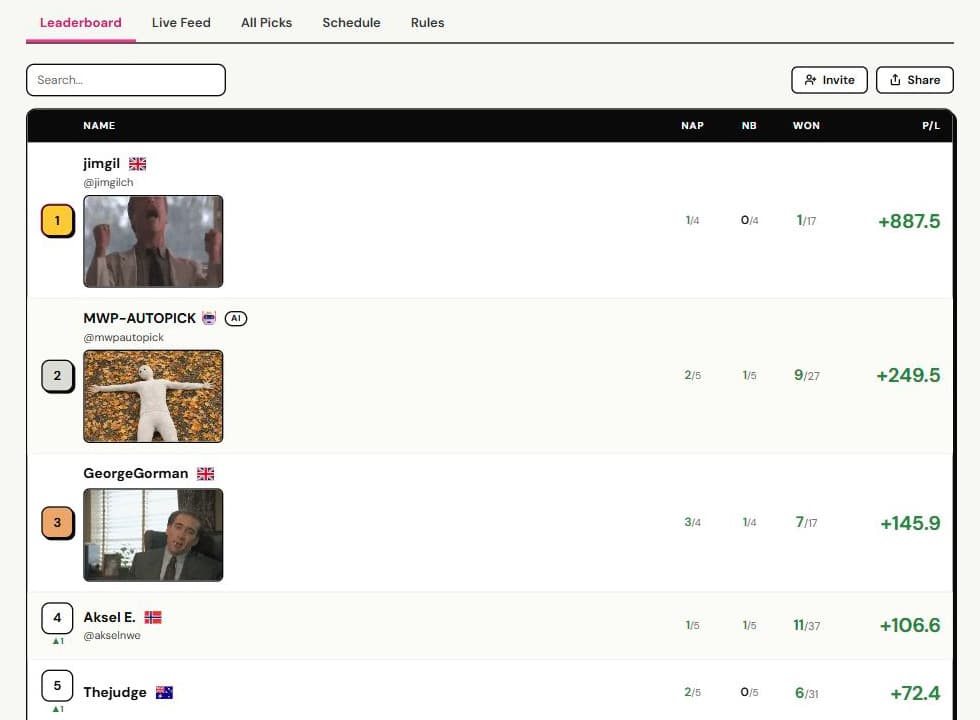
Free competitions on big race days such as Royal Ascot and the Breeders' Cup. Players submit their picks before the races, points are scored automatically when the results come in, and a leaderboard shows who is ahead. The first was Royal Ascot in June 2026. It grew out of competitions I ran on Twitter around the Dubai races for a couple of years. The idea is to make racing fun to follow, for people who don't bet and in races you haven't bet on.
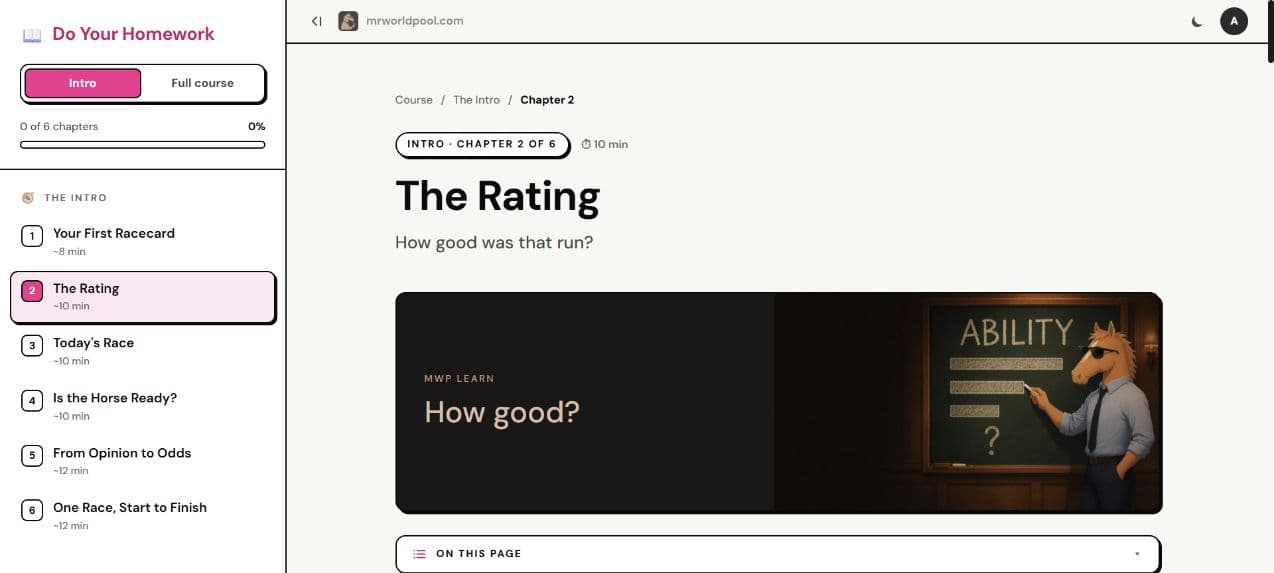
Do Your Homework: an interactive course built around real racecards. A short introduction of six chapters teaches people to read form and assess a race, and the full course of sixteen goes deeper into the method. Learners compare horses and test their judgement in exercises along the way. I made the content, the illustrations and the interactive part myself. The screenshot is from the development version. The course will be free, but it isn't open to everyone yet.
A model that sets its own odds on horse races, and an odds board where I show it at work.
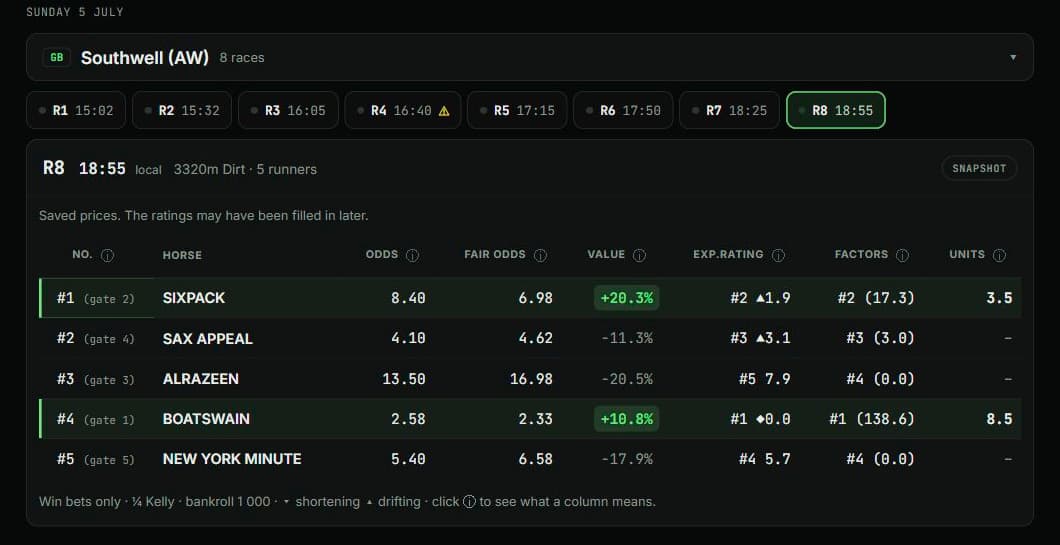
The model builds on the ratings and data from Mr. World Pool. It estimates each horse's chance of winning and turns that into its own odds, which I can hold up against the market. Ask anyone who knows the game and they'll tell you that beating the racing markets is close to impossible these days. That's part of the appeal, and it's the work I'll never quite finish.
Project Benter is how I show the model: an odds board and live streams where I go through races and show the model's prices along the way. It's also practice at something I find less comfortable: standing up and explaining myself.
These are two products in their own right, but they really have the same job: bringing the right people into the Mr. World Pool universe and helping them survive there.
A manual for people who have decided to take it seriously.

Around 100 pages on value, bankroll, variance, psychology, market structure and sport-specific edges. I wanted everything I've learned in one place, without anecdotes or padding. It's meant to be the one book you read on the subject, not the first of fifteen. It's also a way of building an audience around my work.
A spreadsheet that keeps you honest.
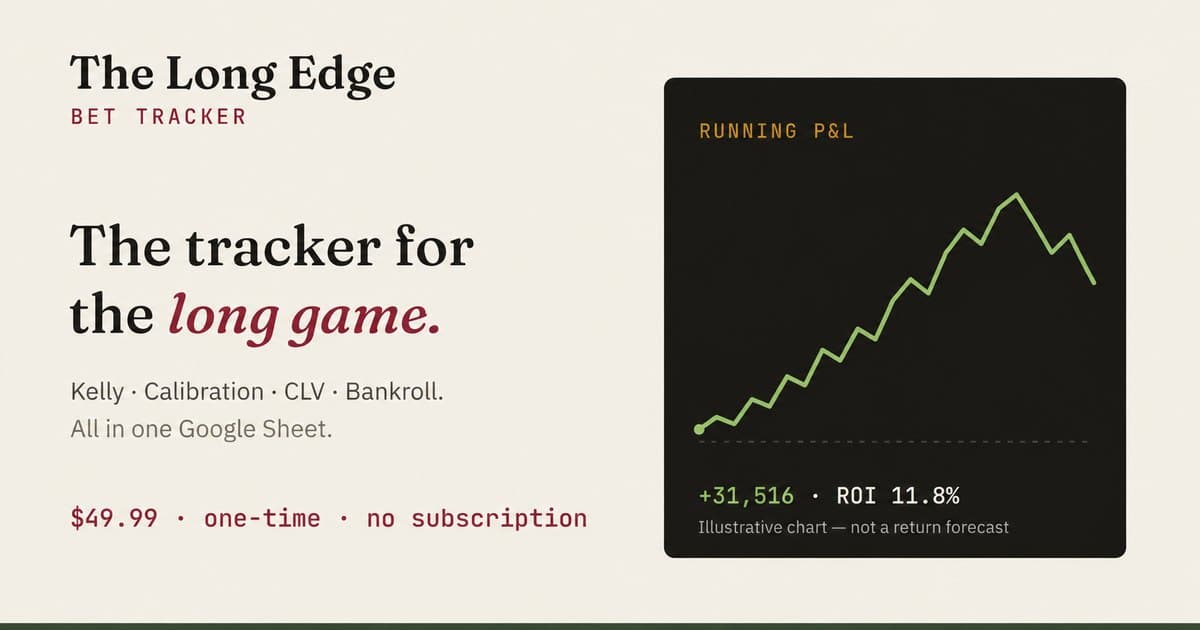
A Google Sheets system I've used and refined for years. It tracks Kelly staking, CLV, calibration and return by sport and market, and makes you answer the same review questions every week and month. The point is to measure what actually tells you something over time, such as whether you beat the closing odds, not just wins and losses.
I spent a couple of days getting it ready to sell, though I don't expect a huge market for it. Selling has turned out to be harder than making it.
Small detours to learn something or try out an idea, and for the fun of it. If someone believes in one of them, I'm happy to discuss working together to take it further.
Mum wanted to try the colours before she started knitting.
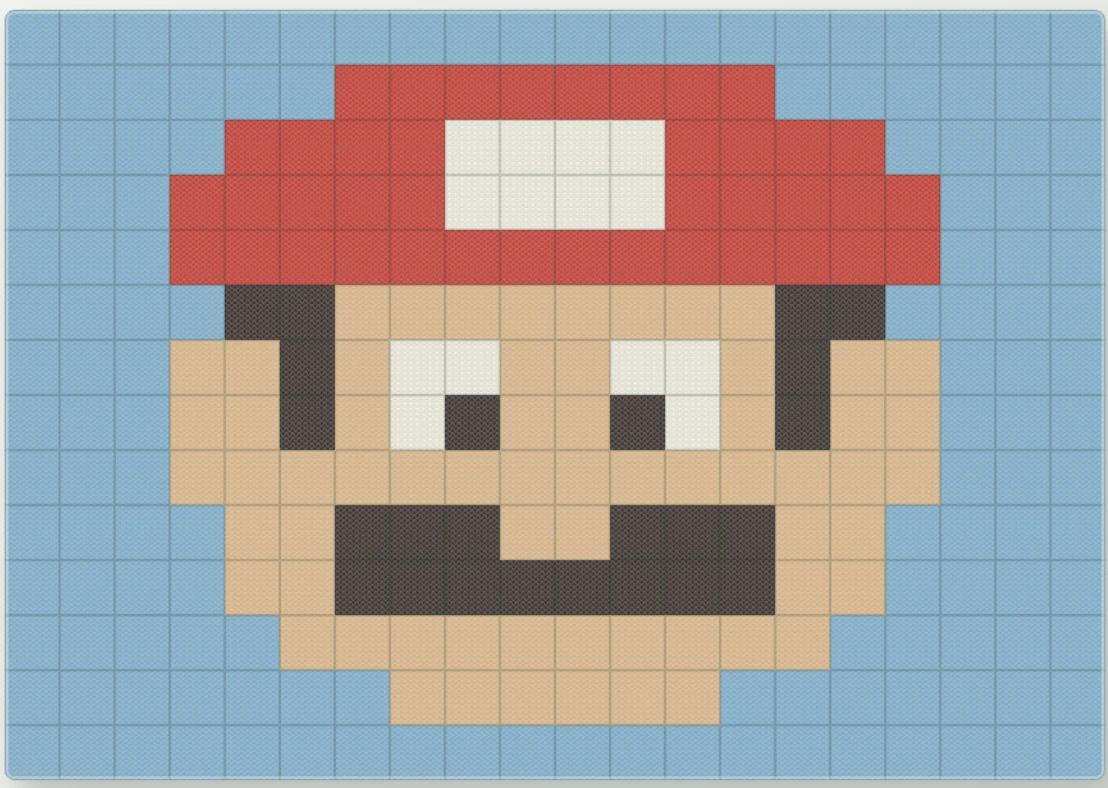
My latest project started with my mum, who is 67. She wanted a colour planner for a patchwork blanket she was knitting for her granddaughter Jenny. Less than fifteen minutes later, the first version was online. She could try colours and patterns before picking up the yarn.
The tool lets her colour in the squares, see a knitted preview and save the pattern as an image. It was a tiny first prototype, but the look on her face made me think there must be plenty of people with an idea they'd love some help to build.
That turned into the idea of helping others do the same. I'm always curious about projects and collaborations.
Editorial letters for early drafts.
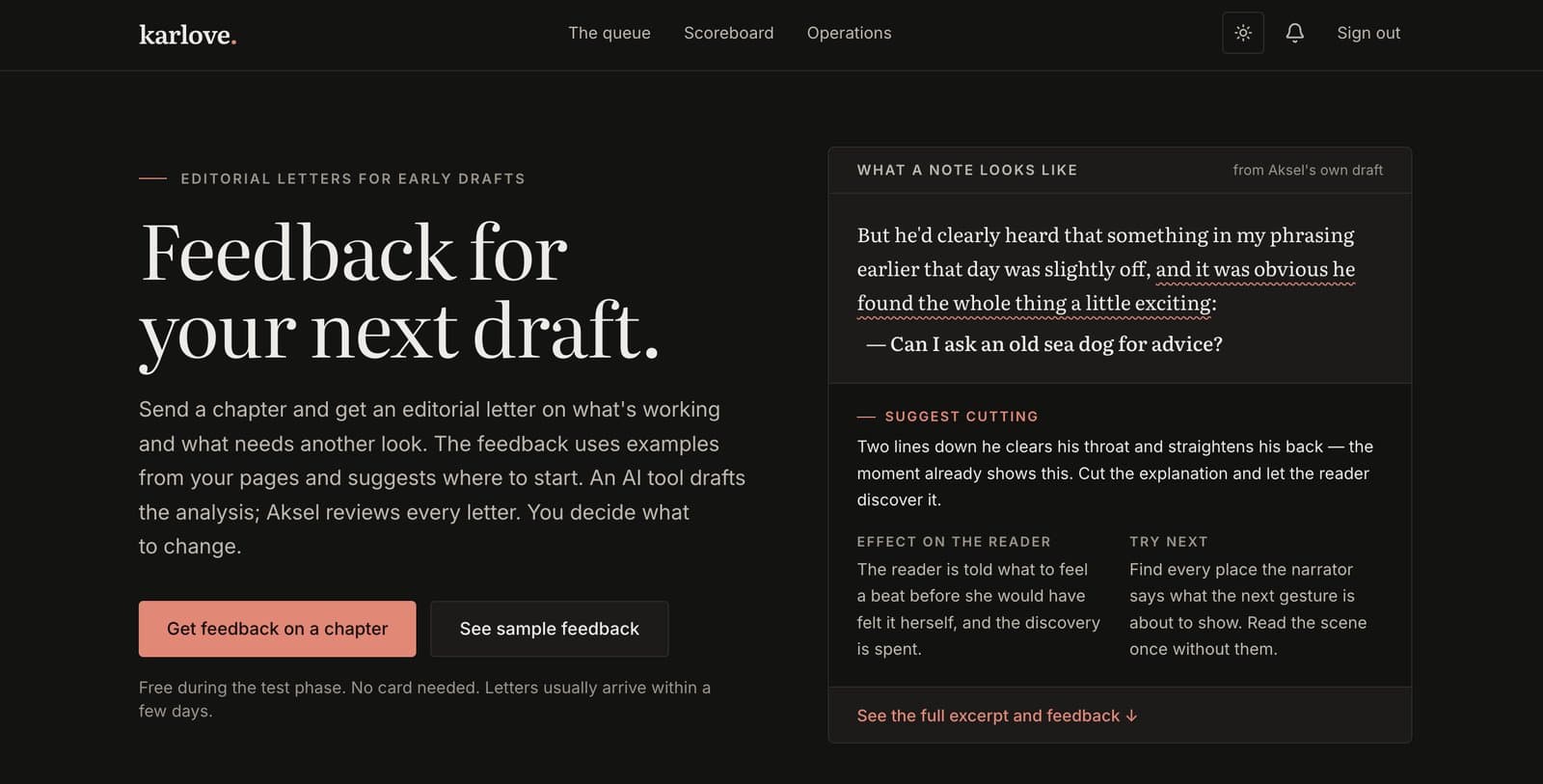
This year I'm writing a series of novels. It's what I do when I'm supposed to be relaxing, and I love it. I do the writing itself without AI, but I needed someone who could read closely, be honest and explain why a text works or doesn't.
Karlove is a Claude skill I've filled with notes from a shelf of books on writing. It is as much a writing coach as an editor: it always explains why something works or doesn't, and points to its sources. So the advice rests on more than a chatbot's gut feeling. It never touches the text; it only gives advice.
A personal page for your job search.
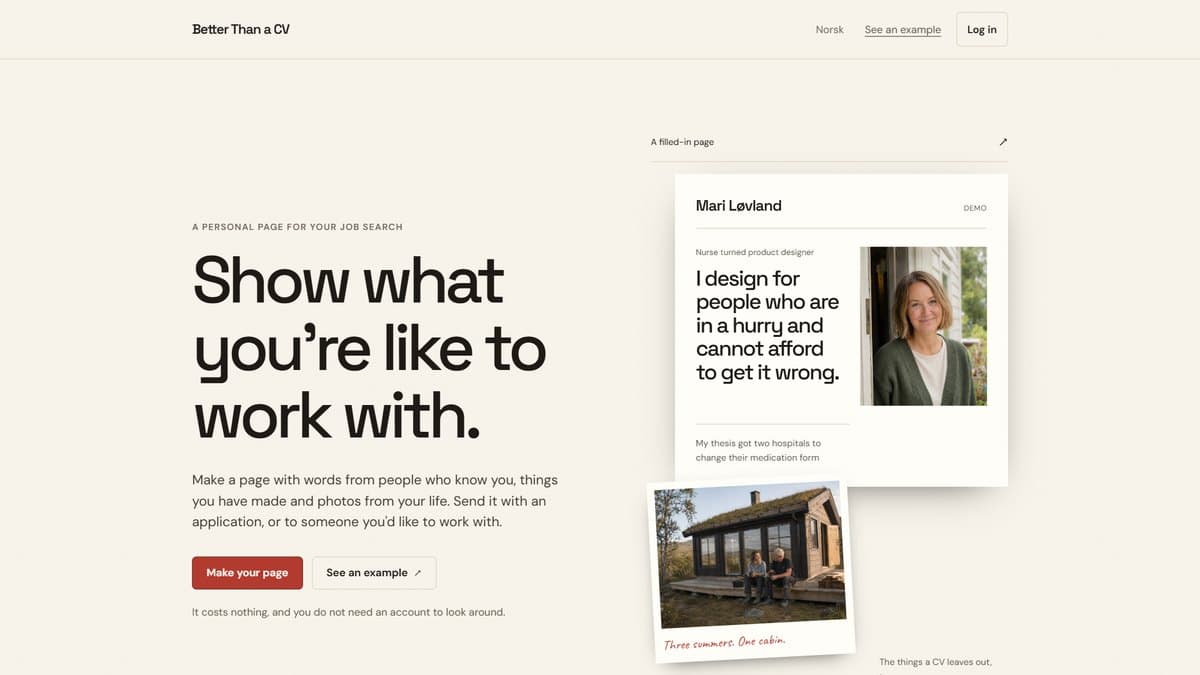
The way recruitment works today, it can be hard to get through to employers who don't know you. And when I've hired people myself, I'd have loved to find something like this about them. Here people can show what it's like to work with them, through words from others, stories and things they have achieved. The core idea is that other people write about you through a link, and you choose what is shown. The site is ready for others to make their own profiles, but it isn't open for that yet. For now only mine is live.
Where is the sun, and is it worth going there?

A small, mobile-first tool that spins a roulette wheel of pre-approved holiday destinations. Only places with the forecast on their side for the next couple of weeks make it onto the wheel. The filters take into account where you fly from, how long your holiday is, your budget, how close you want to be to the sea and who you're travelling with.
I built it in three days with Claude Code, purely as a safe trial to get properly comfortable with the tool before I dared let it loose on the holy of holies, Mr. World Pool. Until then, I had been painstakingly careful with every detail there.
Help with writing to each other.
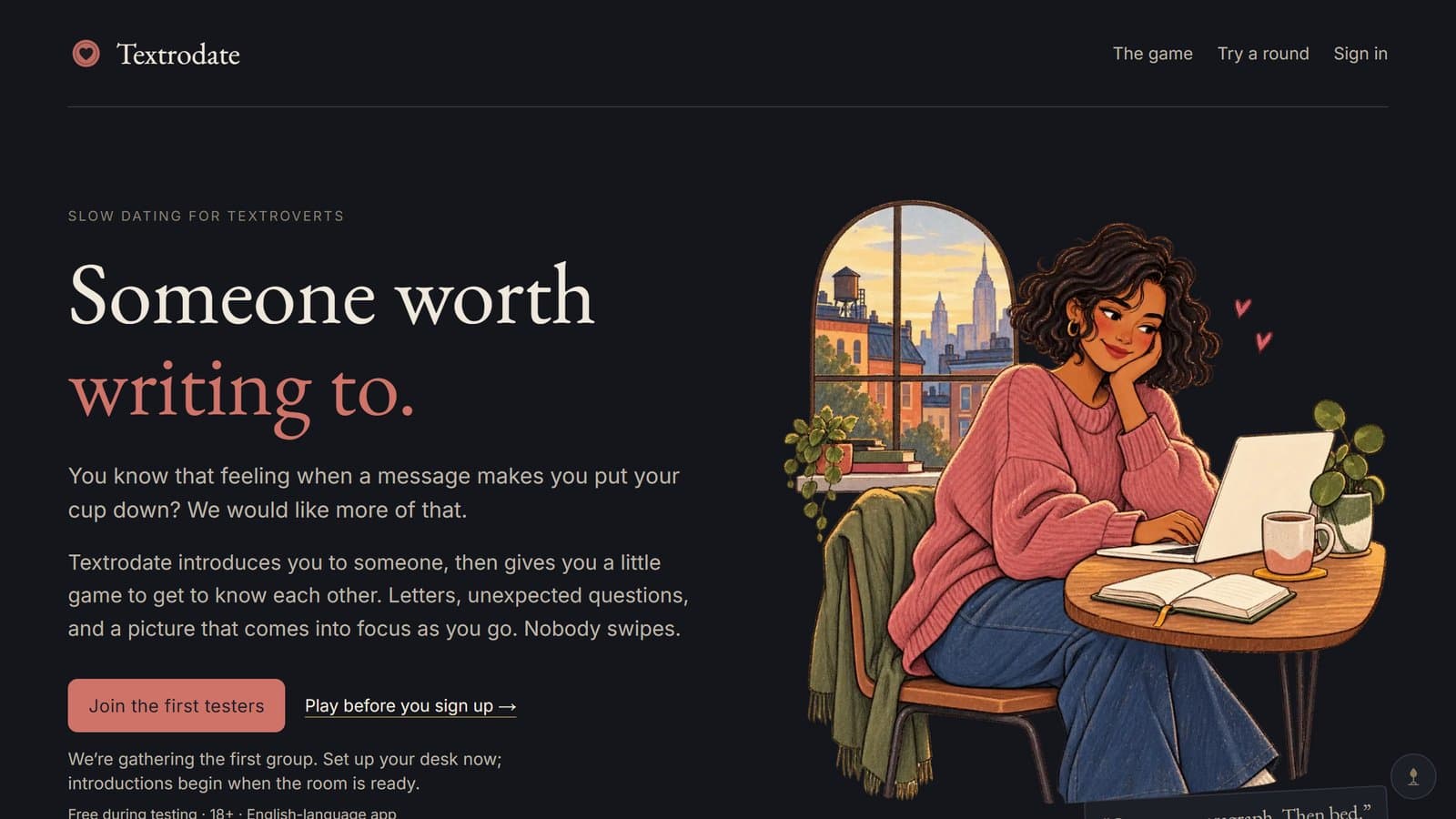
Textrodate is at an early stage. I'm turning it into a digital dating experience for anyone who'd like a little help writing to each other and getting to know each other online.
Matching algorithms and the like are out the door. Two people talking is the whole product.